
•
July 17, 2025


Sand Technologies
The conversation around AI in smart cities has often focused on trust issues for good reason. Many residents remain cautious about how AI is used, how their data is handled and what the long-term implications might be for privacy, security and jobs.
But new data collected from a recent Sand Technologies survey of 2,000 U.S. residents shows there’s more to the story. Despite skepticism, nearly 7 in 10 U.S. residents believe AI has the potential to make urban life better. People want to see AI solving real problems. The takeaway for city leaders is clear: move beyond pilots and focus on delivering visible, meaningful impact where it matters most.

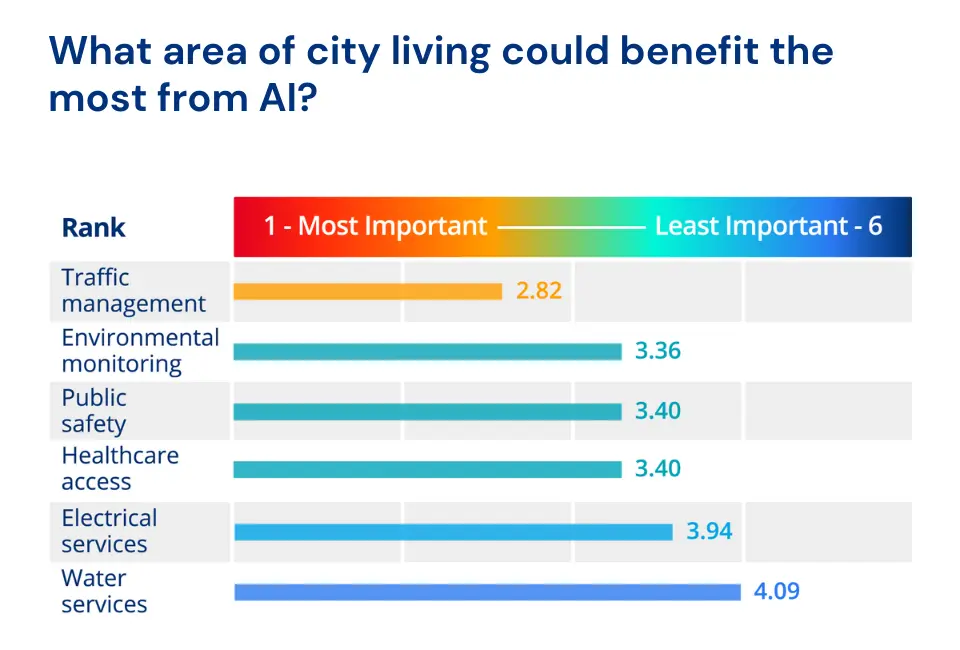
Managing traffic is a persistent challenge for cities and a daily frustration for residents. In the U.S., road traffic volume increased by 2% in January 2025 compared to the previous year. The cost of traffic goes far beyond frustration. In 2024, delays cost the U.S. economy over $74 billion, with individuals losing $771 each in wasted time and productivity.
It’s no surprise, then, that traffic management emerged as a top area where respondents believe AI can make a meaningful difference. Fortunately, cities around the U.S. are already applying AI through solutions like intelligent traffic signals to predictive congestion management. The benefits are tangible – more productivity, fewer emissions and stronger local economies as people and businesses move more efficiently.
Having solutions that deliver benefits that are immediate, visible and measurable allows cities to show AI’s value in solving real, everyday problems. They also help rebuild trust and lay the groundwork for broader adoption.

No matter how advanced a city becomes, public safety remains the foundation on which everything else depends. Without it, other smart-city innovations, from mobility to sustainability, struggle to deliver real value because people don’t feel secure enough to engage with them fully.
The survey results show that safety isn’t just a theoretical concern, but a daily reality that shapes how people feel about where they live. Crime rates were consistently ranked as a top pain point, and for many, a deal-breaker: 64% of respondents said they would move to a new city for lower crime alone.
The concern is even sharper in the West, where the visibility of crime in major urban centers has pushed safety to the top of the agenda. Women, too, reported higher levels of concern than men across all regions, with over half identifying safety as a priority. For cities, this reinforces the need for AI solutions that not only track crime but also address the everyday realities of those who feel most vulnerable.
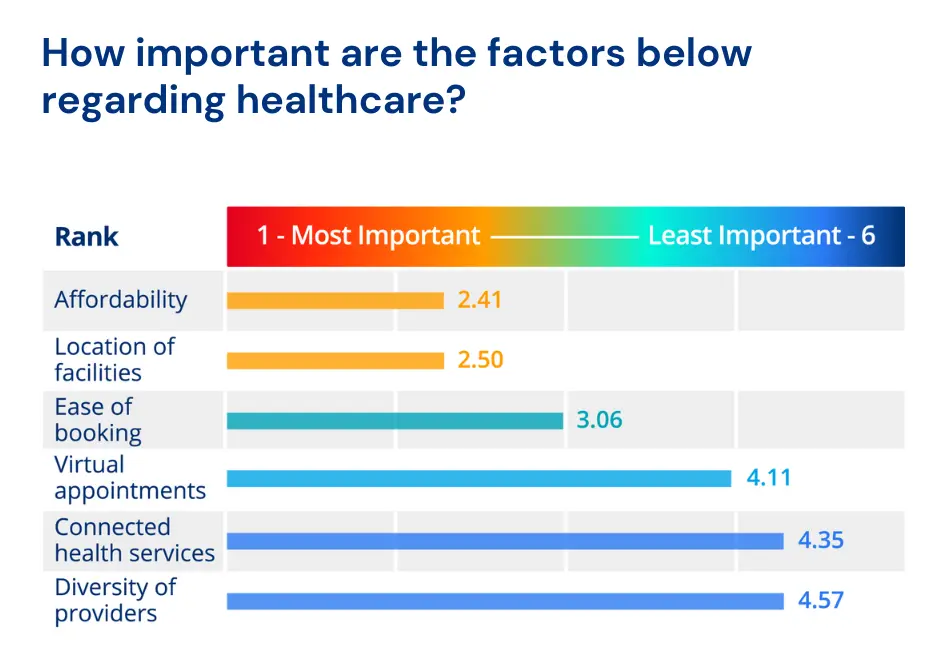
Utilities like electricity and water might not top the list of daily frustrations, but they remain fundamental to people’s quality of life. In the survey, citizens still identified utilities, alongside air and water quality, as areas where AI could improve life. Why? Because when these services fail or costs rise, the impact is immediate and personal.
Across regions, people seek utilities that are more reliable, efficient and resilient to future disruptions. They see AI as part of the solution, from smarter grids to better water management, helping ensure these essential services operate efficiently, so citizens don’t have to think twice about them. People want essential services that will remain reliable and resilient in the face of future pressures.
Throughout the survey, it was clear that citizens have a clear sense of where AI can make a difference and where it should be applied. The real challenge was how city leaders approach AI adoption.
Too often, AI-driven smart city initiatives are motivated by a desire to showcase innovation rather than to solve everyday problems. But as many forward-looking leaders recognize, technology in cities should start with people, not systems. Success should be measured not by how advanced the tech is, but by how much it improves daily life.
So, how can city leaders close the gap between good intentions and meaningful results?
Focus on where AI can remove everyday obstacles, such as reducing wasted time through smarter traffic lights and parking tools, improving mobility access with optimized transit, and preventing service outages through predictive maintenance on utilities. These kinds of tangible, visible, everyday improvements build trust far more effectively than abstract promises.
What the survey makes clear is that people want cities that make everyday life easier, not just for the sake of technology. They’re looking for AI to solve real problems that affect how they live, work and move through their communities.
This moment presents a real opportunity for city leaders to advance the use of AI in ways that make a difference. Progress is already underway, but to succeed, a people-first approach to innovation must guide it.
Other articles that may interest you