
January 14, 2026
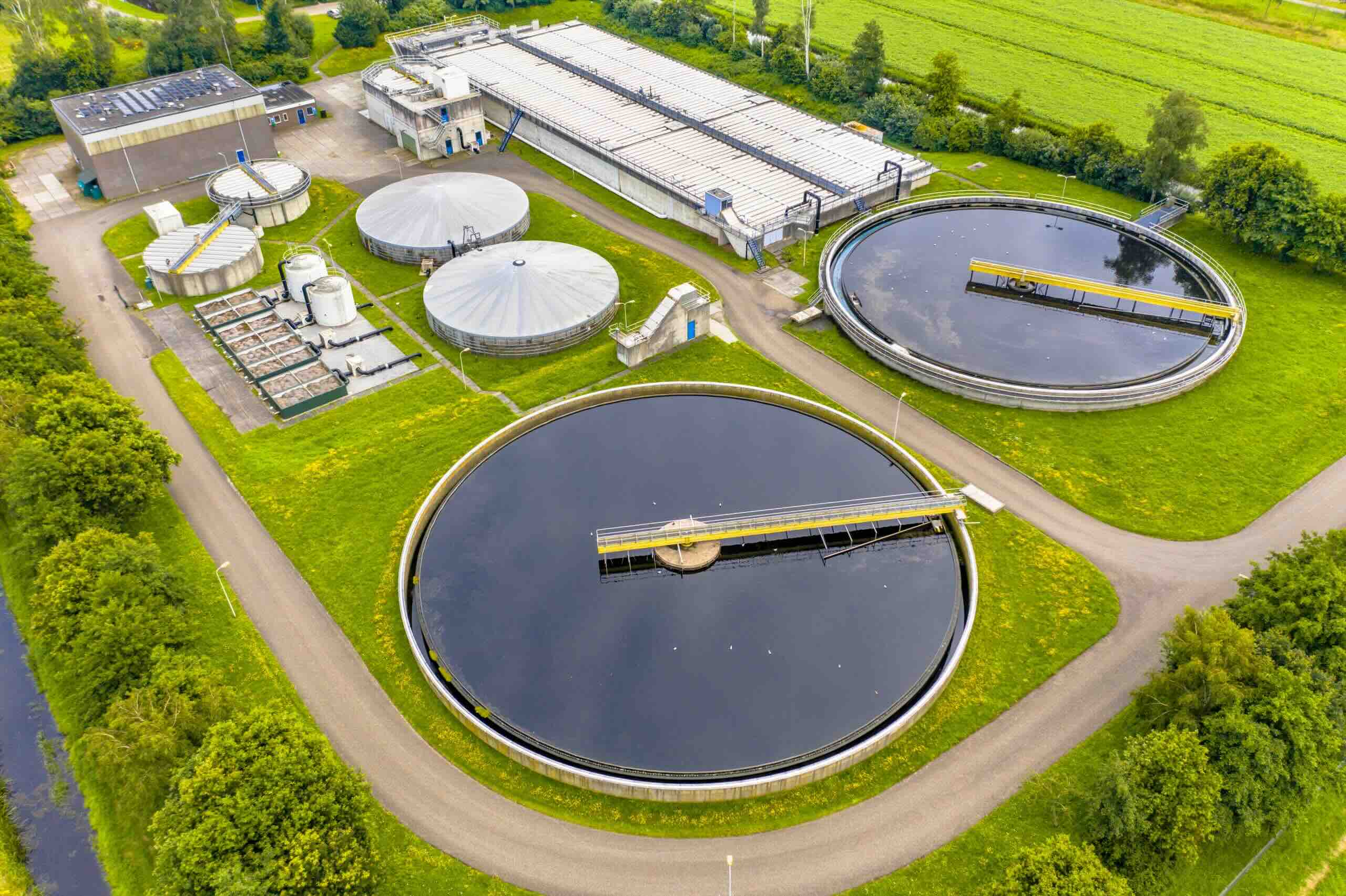
Applying machine learning to wastewater systems requires a different mindset than building models for purely digital environments.
Wastewater networks are physical, distributed, and continuously evolving systems governed by fluid dynamics, environmental variability, and operational constraints. Signals emerge from real-world processes such as gravity-driven flow, sediment transport, pump behavior, and rainfall response. Machine learning systems must therefore operate within the constraints of physics, infrastructure topology, and imperfect telemetry.
At Sand, implemented through the SandOS platform, wastewater intelligence is approached as a layered scientific and engineering problem combining industrial telemetry, statistical learning, domain knowledge, and operational workflows.
This article outlines the technical components required to successfully deploy ML in wastewater environments.
Wastewater infrastructure operates as a complex dynamical system influenced by both deterministic physical relationships and stochastic environmental factors.
Key physical drivers include hydraulic behavior such as:
External environmental factors also introduce variability, including:
Infrastructure performance is additionally shaped by degradation mechanisms such as:
These factors produce time-series signals that are noisy, nonstationary, and context-dependent.
As a result, ML systems must be designed to accommodate:
Wastewater ML is therefore as much about scientific system design as model selection.
Most wastewater ML systems rely heavily on telemetry originating from SCADA (Supervisory Control and Data Acquisition) environments.
SCADA platforms capture signals from distributed industrial assets and expose time-series data representing system state.
Typical variables include:
Unlike conventional software telemetry, SCADA signals frequently exhibit irregular sampling intervals, missing observations, calibration drift, and noise introduced by harsh operating conditions.
Signal reliability therefore becomes a primary design consideration.
Each layer introduces uncertainty that must be accounted for explicitly.
Production ML systems must integrate data from multiple operational platforms including SCADA historians, asset registries, maintenance management systems, GIS topology layers, and environmental data feeds.
Engineering challenges often include:
Robust ingestion pipelines typically include both streaming and batch components, as well as metadata enrichment layers to maintain contextual integrity across datasets.
Reliable ingestion architecture provides the foundation for downstream analytics.
Wastewater sensors operate in environments that are significantly more hostile than typical enterprise data environments.
Common sources of signal degradation include:
Typical signal artifacts include:
Scientific approaches to signal conditioning may involve:
Explicit modeling of uncertainty improves the robustness of downstream predictions.
Wastewater networks are graph-structured systems in which upstream conditions influence downstream behavior.
Feature engineering often incorporates both spatial and temporal relationships, including:
Domain-informed features frequently improve both interpretability and model stability.
Model selection is typically driven by the structure of the problem rather than algorithmic novelty.
Common modeling approaches include:
Hybrid statistical and machine learning approaches are often preferred due to limited labeled datasets and evolving system behavior.
Model interpretability is particularly important in operational contexts where engineers must trust model outputs to take action.
Machine learning systems generate value when insights are embedded directly into operational workflows.
Typical interfaces include:
Effective decision interfaces reduce cognitive load while maintaining transparency into underlying signals.
Operational adoption depends heavily on workflow relevance rather than algorithmic sophistication.
Reliability emerges from the interaction of these layers rather than from any single model.
One of the primary challenges is nonstationarity. Wastewater networks evolve continuously due to infrastructure upgrades, demographic changes, seasonal rainfall variation, and maintenance interventions. Statistical relationships observed in historical data may therefore shift over time.
Another challenge is sparse labeling. Environmental incidents such as pollution events are relatively rare, producing highly imbalanced datasets. Weak supervision approaches, semi-supervised learning techniques, and iterative labeling strategies are often required.
Data ownership structures also tend to be distributed across engineering, operations, compliance, and asset management teams. Establishing consistent data definitions and shared ontologies becomes an important enabler of scalable analytics.
Finally, domain expertise plays a critical role in interpreting anomalous signals. Subject matter experts provide essential insight into hydraulic behaviors that may not be immediately apparent from data alone. Capturing and codifying this expertise improves long-term system performance.
Well-designed ML systems can support earlier identification of blockages, improved prioritization of maintenance interventions, enhanced environmental protection outcomes, and more efficient regulatory reporting processes.
Impact typically arises from improved timing of operational decisions rather than from model accuracy metrics alone. Earlier interventions often reduce downstream costs, environmental risk exposure, and operational disruption.
Implementing ML in wastewater systems requires collaboration across multiple disciplines including machine learning engineering, hydraulic modeling, geospatial analysis, industrial systems integration, and human-centered interface design.
Scientific rigor must be balanced with engineering pragmatism. Systems must remain robust under uncertain real-world conditions.
Wastewater infrastructure is becoming increasingly instrumented through distributed sensing technologies. Machine learning enables earlier detection of emerging risks, improved resilience planning, and more efficient resource allocation.
However, realizing these benefits requires thoughtful integration of physical science, statistical modeling, and operational workflows.
Wastewater ML is not simply about building models. It is about building systems that improve decision-making under uncertainty.
For engineers interested in applying AI to real-world physical systems, wastewater represents one of the most technically rigorous and societally meaningful application domains. The future of infrastructure intelligence will depend on integrating physics-informed reasoning, statistical learning, and operational insight into unified decision systems.
We are actively working with engineers, researchers, and partners who want to help build this new category of software. If you are interested in contributing to the development of decision intelligence systems at global scale, we would welcome the conversation.
Other articles that may interest you
Loading posts...