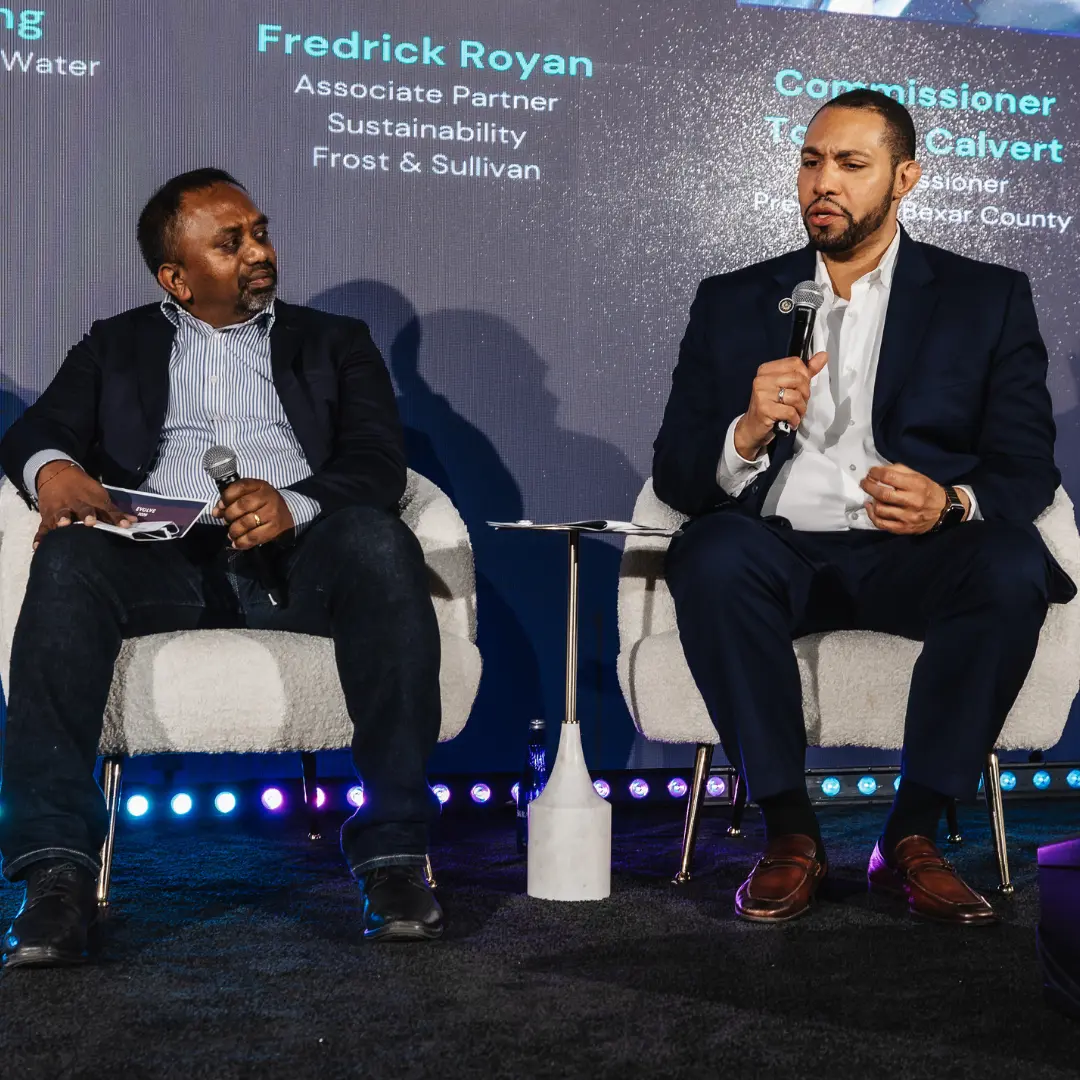
EVOLVE is Sand’s annual summit bringing together technology leaders, policymakers and practitioners working at the intersection of AI and critical infrastructure.
For most people, water is invisible—until it isn’t.
Opening the discussion with Cape Town’s “Day Zero,” when residents counted down the days until taps were expected to run dry, the panel reminded the audience that water infrastructure is one of society’s most critical—and least visible—systems. As utilities face aging assets, workforce shortages and growing demand, the question is no longer whether more data is available. It’s how to use that data to make better decisions before failures occur.
Water utilities rarely have the resources to fix everything at once. The panel argued that AI's greatest value lies in helping operators decide which assets require immediate attention, which can safely wait and where intervention will have the greatest impact.
For every five workers leaving many utilities, only two are replacing them. As experienced operators retire, decades of practical knowledge risk disappearing with them. Capturing that expertise—and making it usable for future teams—emerged as one of AI's most valuable applications.
Several speakers acknowledged that utilities already collect enormous amounts of operational data. The challenge isn't gathering more information—it's building systems that operators trust enough to use in everyday decision-making and that improve through continuous feedback.
age of a majority of US water infrastructure
workers replaced for every five who leave
Current population of Bexar County
Additional residents expected within a decade
Water utilities face a challenge that extends well beyond infrastructure. Every day they make decisions about which assets to repair, which investments to prioritize and how to deliver reliable service with limited budgets and shrinking workforces. Those are fundamentally decisions about risk.
This discussion suggested that AI’s greatest contribution isn’t replacing operators or automating utilities. It’s helping experienced teams make better decisions with the information they already have—identifying where intervention will have the greatest impact before small failures become costly crises.
The conversation also reinforced an important lesson for Physical AI more broadly. Sensors, dashboards and predictive models only create value when they become part of operational decision-making. That requires more than technology. It requires trust, continuous feedback and close collaboration with the people who understand the systems best.
Perhaps the session’s biggest insight was this: resilience isn’t built by predicting every failure. It’s built by knowing which ones matter most—and acting before they happen.

Chief Delivery Officer, Sand
Moderator

CEO, Prince William Water

Technology Director, Water Business, HDR Inc.

Associate Partner Sustainability, Frost & Sullivan

Commissioner, Precinct 4, Bexar County