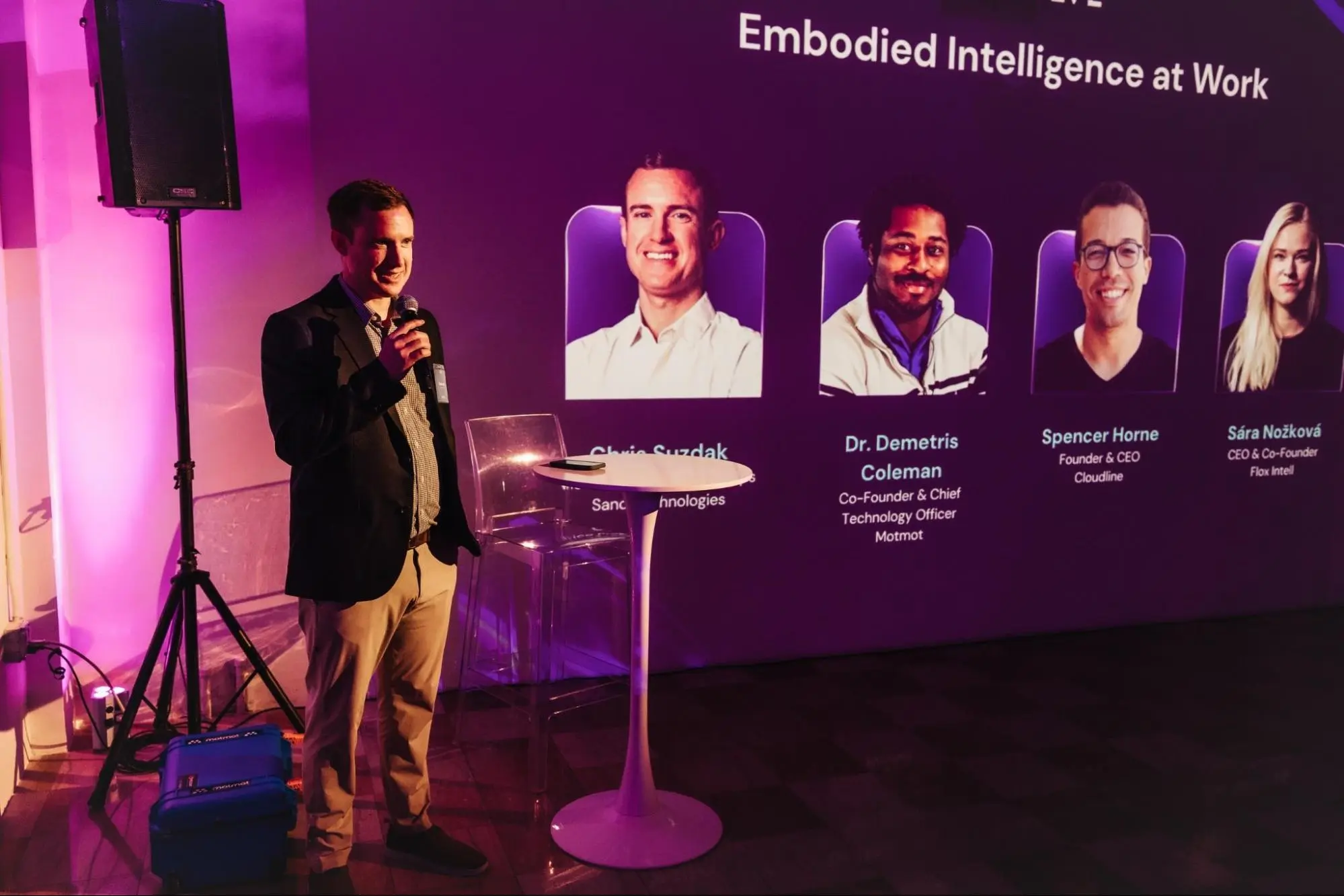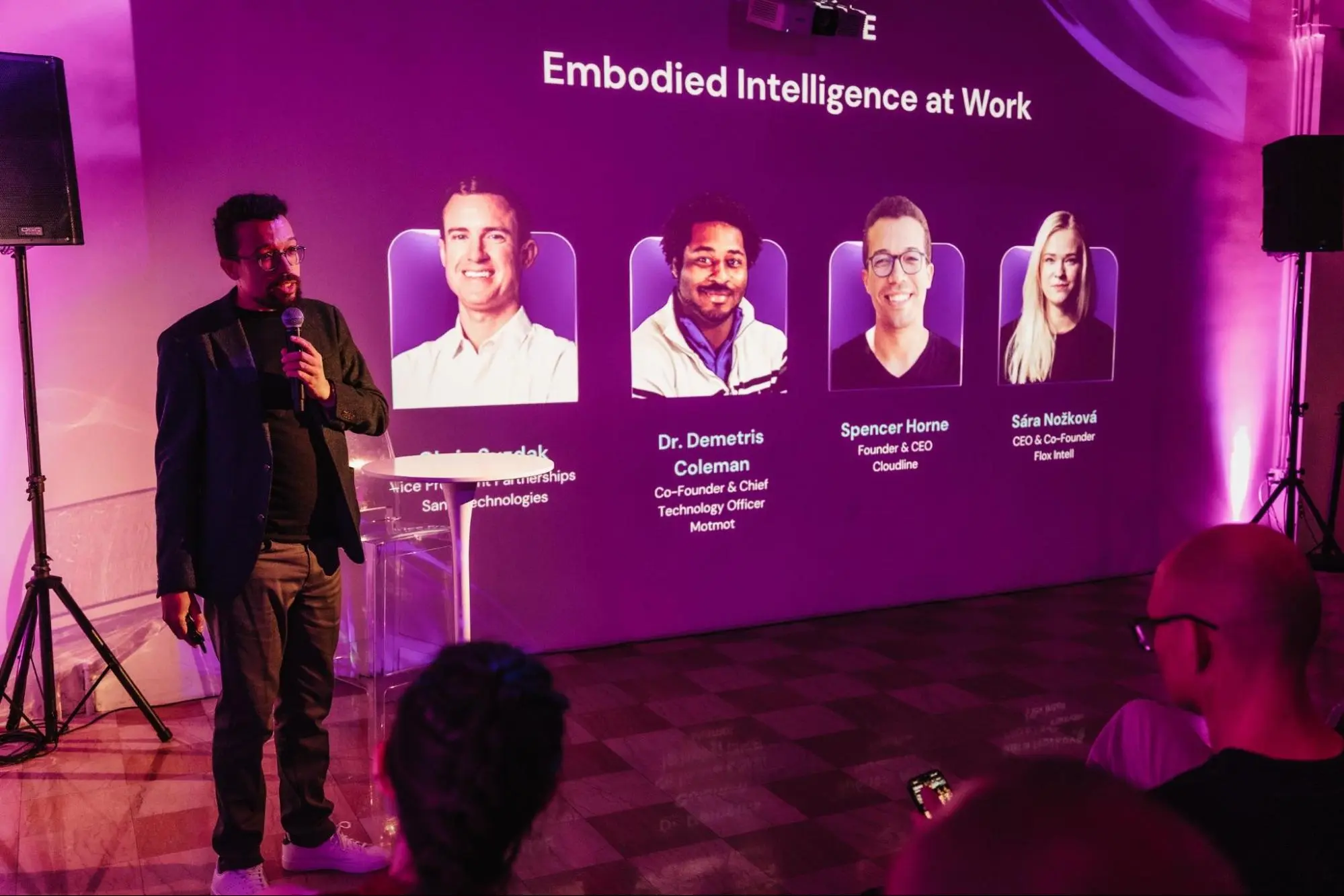

Sand’s Chris Suzdak framed the session before any founder spoke. These three companies are not pitching for investment. They are showing the kind of sensor and data partners that plug directly into the SandOS Marketplace unveiled in the keynote, the physical layer that lets AI sense, analyze, and act in the real world.
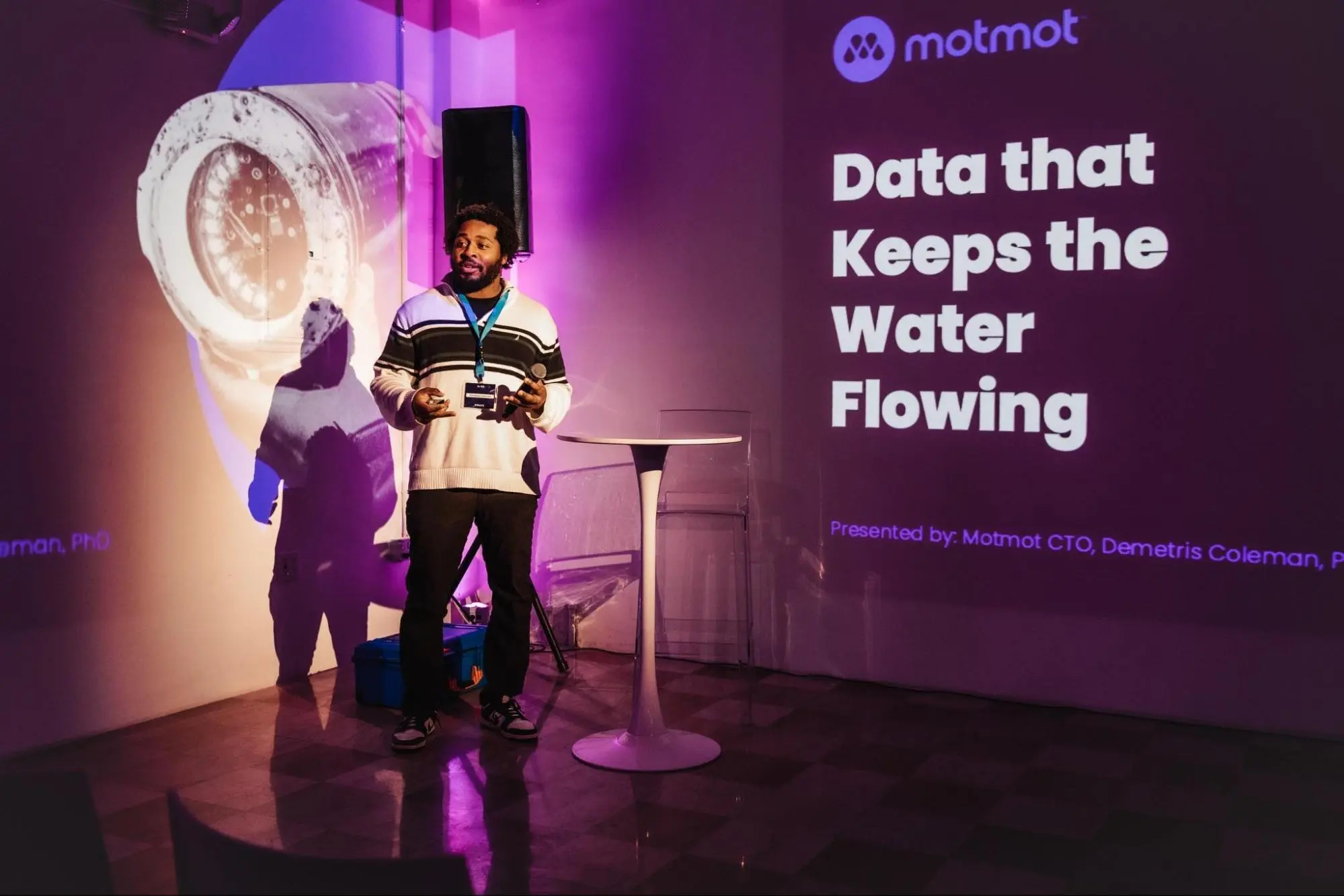
Dr. Demetrius Coleman walked through the economics of reactive maintenance. Most water utilities fix pipes once they break, or plan replacements on engineering guesswork based on a pipe’s age and material. MotMot’s robots replace that guesswork with recorded data, cameras, audio, and pressure sensors moving through the pipe itself. The current generation is tethered for safety. Full autonomy is next.
Spencer Horne’s pitch was about resolution and reach as a trade-off. Satellites see everything but resolve little. Crewed aircraft resolve well but are too expensive to fly often. Drones resolve best of all but can’t cover distance. Cloudline’s airship is built to sit in the middle of that triangle, flying far enough and often enough to build the kind of longitudinal dataset that makes change detection possible over time.
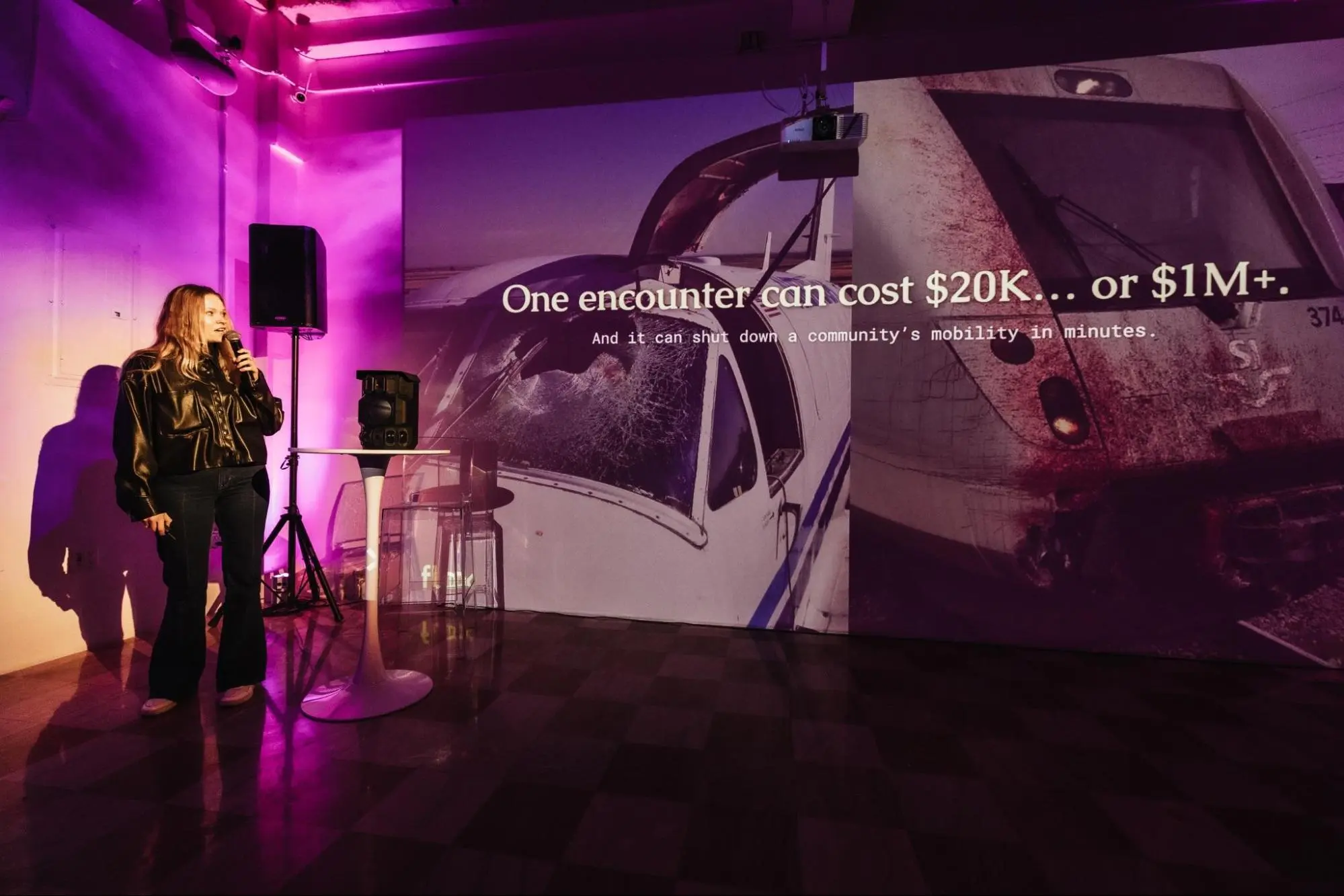
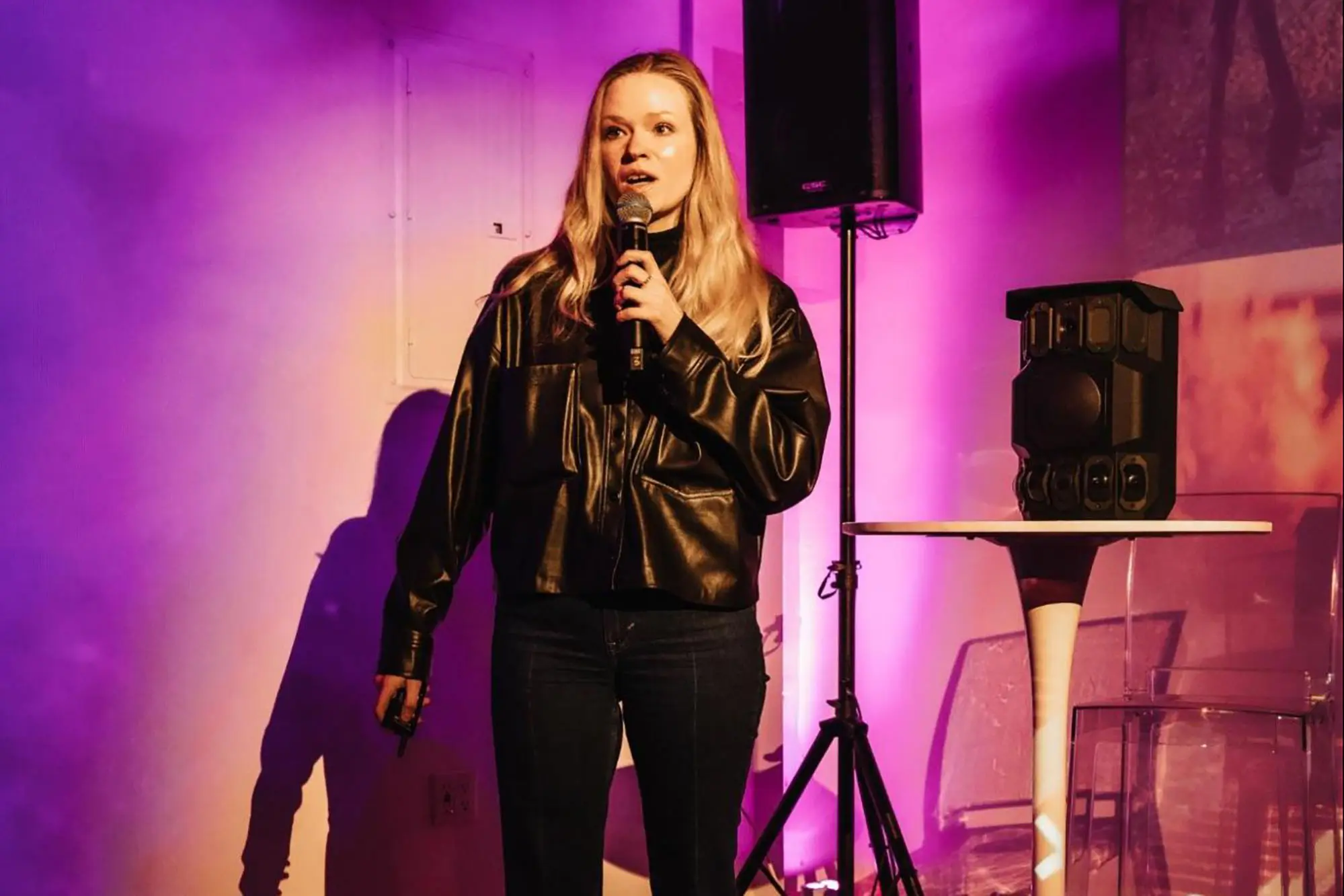
Sára Nožková closed with the case for Flox. Legacy deterrents like pyrotechnics and scarecrows fail because animals habituate to them, and because they take constant human labor to run. Her field unit, called Edge, is built for remote and harsh environments, works across species, and learns from every interaction. Every encounter feeds a platform that can also generate the regulatory reports authorities require.