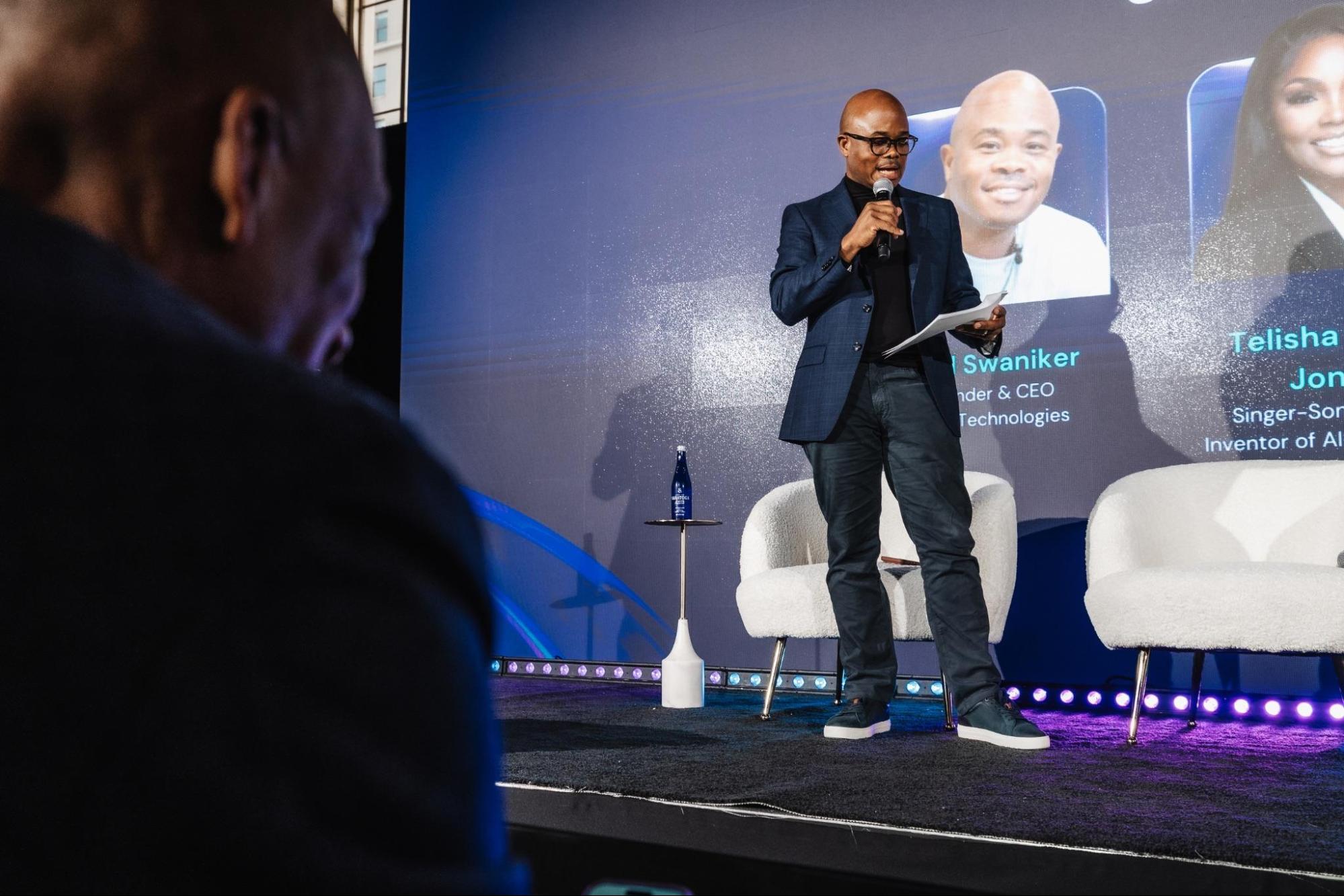
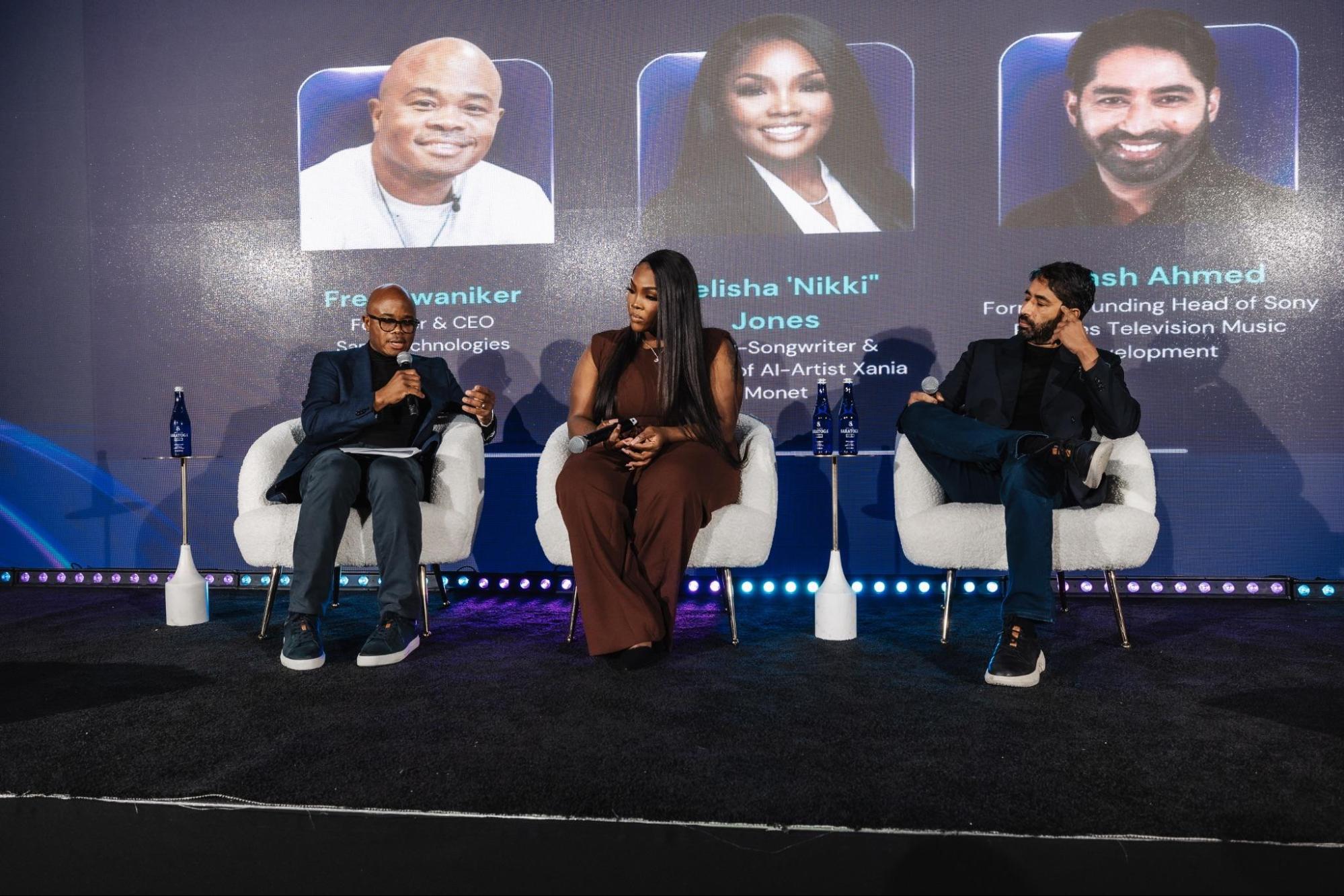
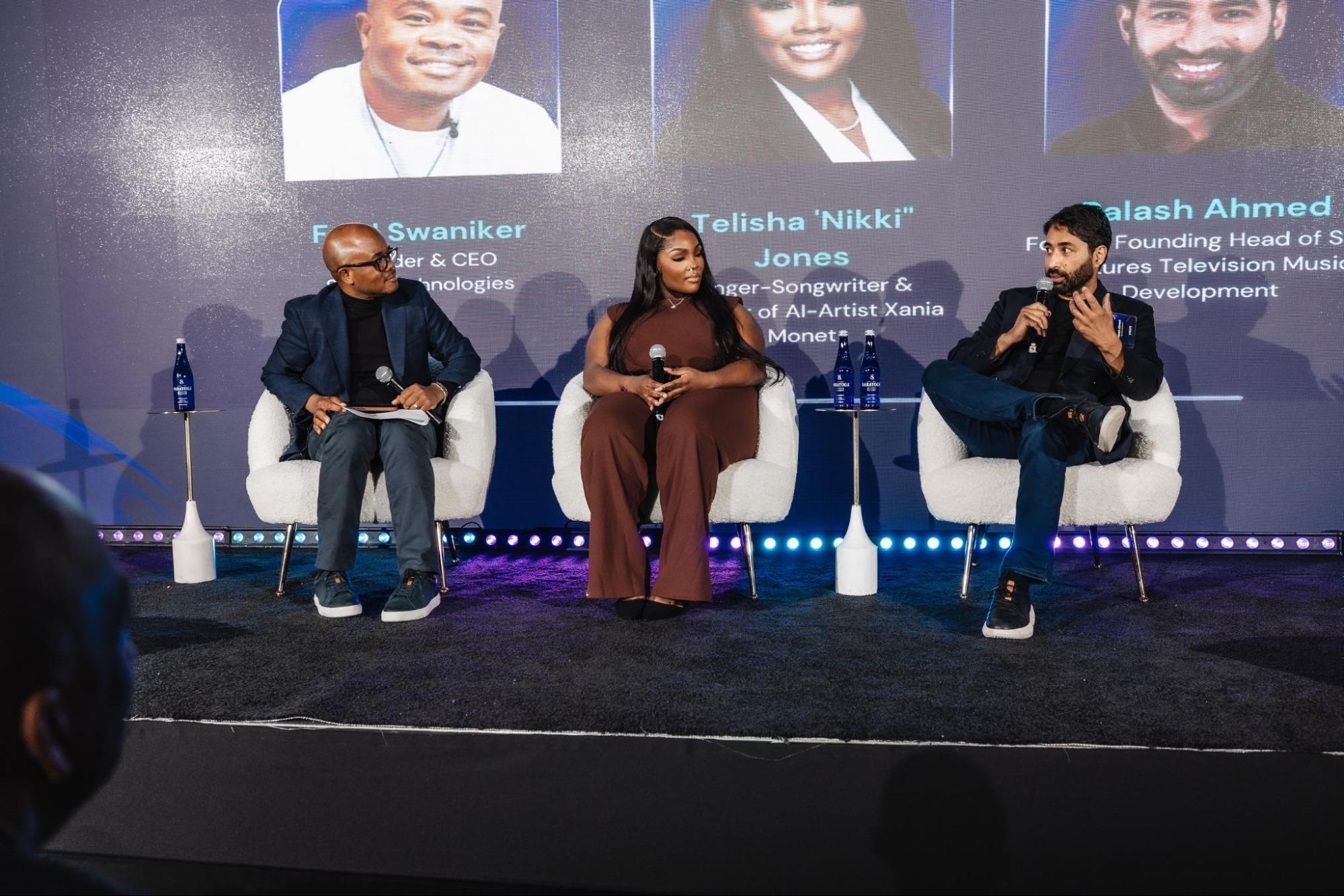
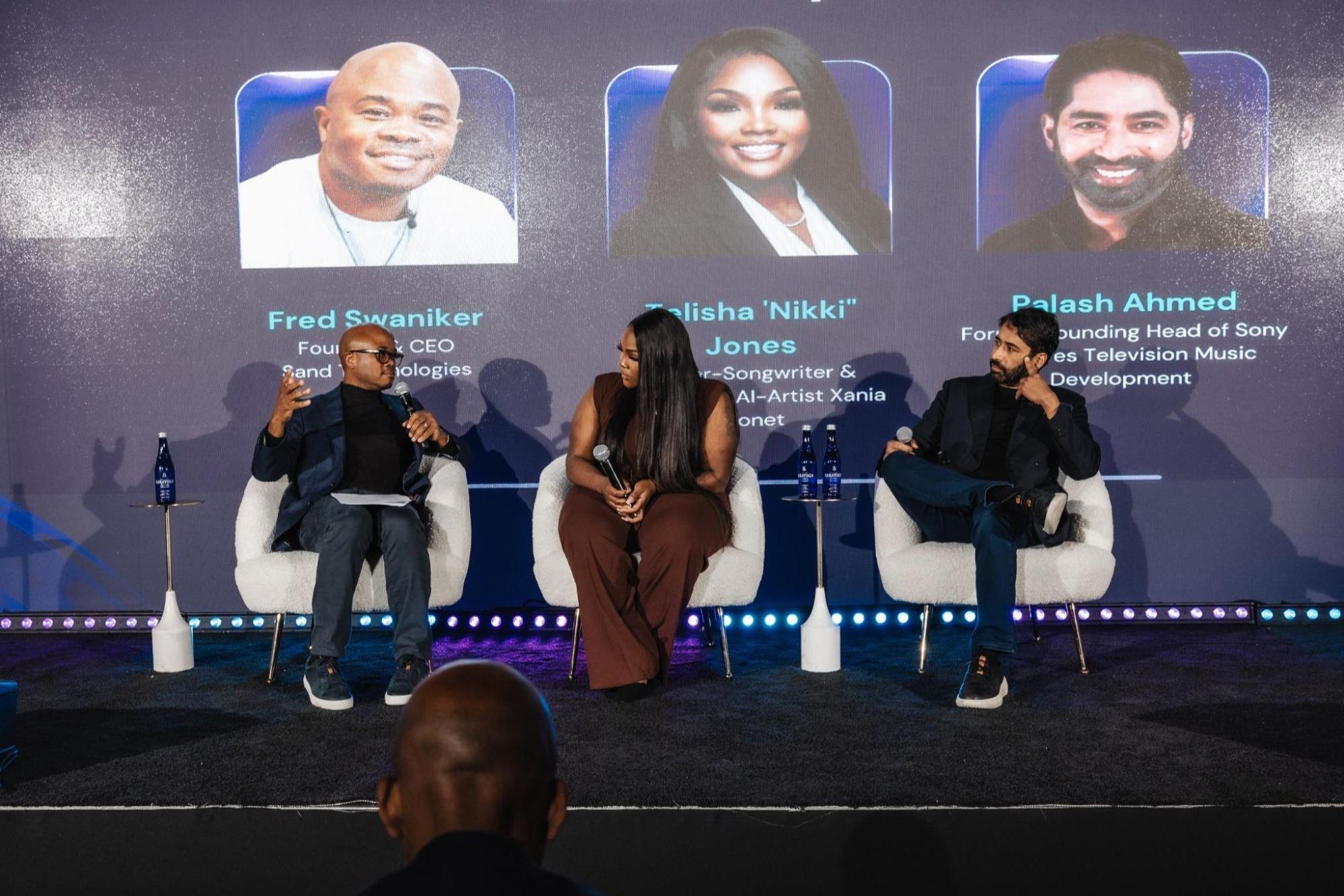
EVOLVE is Sand’s annual summit bringing together technology leaders, policymakers and practitioners working at the intersection of AI and critical infrastructure.
As AI becomes increasingly capable of generating music, images and video, one question continues to dominate the creative industries: what happens to human creativity?
This conversation explored that question through the story of Xania Monet—an AI artist that reached the Billboard charts and secured a multi-million-dollar record deal. But rather than asking whether AI can create, the discussion focused on something deeper: what role human taste, judgment and authorship play when AI becomes part of the creative process.
An AI artist reached the Billboard charts and signed a multi-million-dollar record deal. The creator behind her argued that this doesn’t represent the end of creativity—it changes where creativity happens.
For Telisha “Nikki” Jones, AI is most valuable when it doesn’t make creative work easier. It makes it harder. As technical barriers fall away, success depends less on execution and more on taste, vision and the ability to make creative decisions that machines cannot make on their own.
Across music, film and entertainment, the discussion pointed to a broader shift: AI is changing who gets to create—but it isn’t replacing the need for human imagination.
The discussion challenged the idea that AI removes human authorship. Instead, it shifts the creative role from producing every element manually to directing, refining and shaping the final work through judgment and intention.
The panel argued that AI is democratizing access to creative industries by reducing the technical and financial barriers that have traditionally limited who gets to create and distribute professional-quality work.
As AI-generated content becomes increasingly common, transparency about how work is created may become just as important as the work itself. Authenticity, disclosure and audience trust emerged as recurring themes throughout the discussion.
Billboard chart position
from experiment to record deal
global streams
of the artist reflects its human creator
Much of the public debate around AI in the creative industries asks whether machines will replace artists. This discussion suggested a different question: how does creativity evolve when AI becomes another creative tool?
The panel argued that technical execution is becoming more accessible, but that doesn’t eliminate the need for human creativity. If anything, it raises the value of the qualities machines struggle to replicate—taste, vision, storytelling and the ability to make meaningful creative choices. As AI lowers the barriers to producing content, differentiation increasingly comes from the ideas behind it.
The conversation also highlighted a broader shift in how creative industries may evolve. AI is expanding who gets to participate, giving independent creators access to capabilities that once required major studios, record labels or production teams. At the same time, greater access brings new responsibilities around transparency, ownership and audience trust. As AI-generated content becomes more common, those questions will shape how creators build credibility with their audiences.
Perhaps the session’s biggest insight was this: AI doesn’t diminish the importance of human creativity—it changes where that creativity is expressed. The future may belong not to those who can create without AI, nor to those who rely on it completely, but to those who know how to direct it with imagination, judgment and intent.

Founder & CEO, Sand
Moderator

Singer-Songwriter & Inventor of AI-Artist Xania Monet

Former Founding Head of Sony Pictures Television Music Development