EVOLVE is Sand’s annual summit bringing together technology leaders, policymakers and practitioners working at the intersection of AI and critical infrastructure.
Airports are among the most operationally complex environments in the world. Every day they coordinate aircraft, passengers, weather, wildlife, security, infrastructure and thousands of frontline staff—all while maintaining an uncompromising standard of safety.
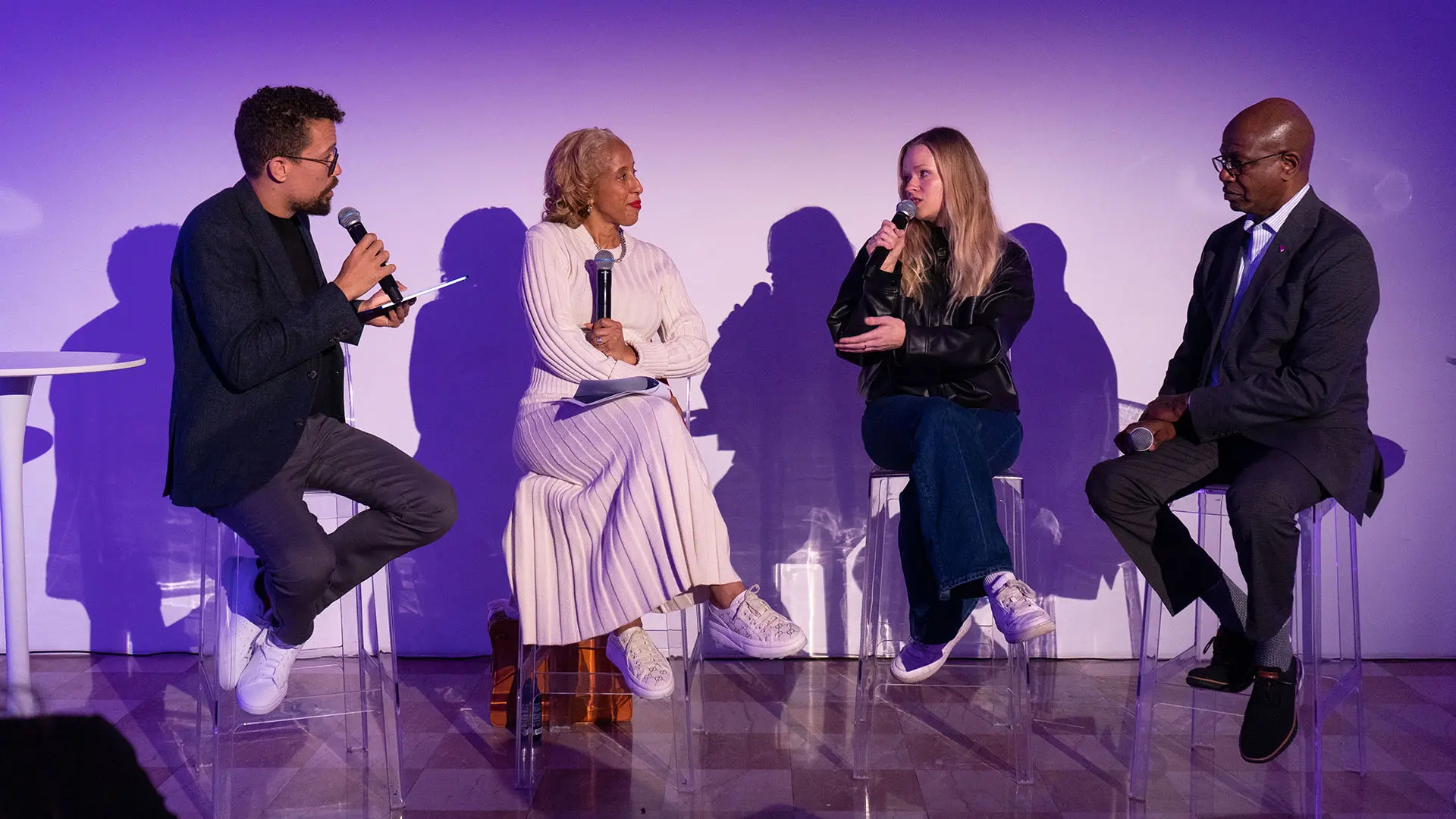
This session explored what it really takes to introduce AI into that environment. The discussion quickly moved beyond technology to the operational realities of procurement, regulation, partnerships and organizational change.
The panel challenged a common assumption about AI adoption: technology isn’t the hardest part. Operational complexity is.
Whether discussing wildlife management, winter operations or passenger experience, the speakers agreed that deploying AI inside critical infrastructure requires far more than good models. It requires trusted partnerships, procurement processes that can keep pace with innovation and solutions that integrate seamlessly into existing operations.
Airports cannot experiment with the same tolerance for failure as many other industries. New technologies must prove they can improve operations without compromising safety, reliability or regulatory compliance.
Across every example—from wildlife monitoring to winter preparedness—the discussion reinforced the importance of integrating AI into established workflows rather than asking operators to replace systems that already work.
Whether managing passenger flow, baggage handling or airfield operations, the panel repeatedly highlighted that optimizing one part of a complex system is rarely enough. Real transformation requires understanding how every operational component connects to the next.
Delta's loss from a single Atlanta snowstorm
current Atlanta airport staff
ATL passengers a year, current vs. planned
range of a single wildlife sensor
Airports offer one of the clearest examples of why deploying AI is fundamentally different from demonstrating it.
Unlike controlled pilots or standalone applications, airports operate as tightly connected systems where every decision affects safety, efficiency and passenger experience. Introducing AI therefore isn’t simply a technical exercise—it requires navigating procurement, regulation, operational workflows and organizational trust, often simultaneously.
The discussion also highlighted an important lesson for Physical AI more broadly: intelligent systems create value when they fit naturally into existing operations. The examples shared—from wildlife monitoring to winter preparedness—showed AI succeeding not by replacing experienced operators, but by helping them anticipate problems, allocate resources more effectively and make faster decisions under pressure.
Perhaps the session’s biggest insight was that modernization is rarely achieved one technology at a time. Complex systems evolve when organizations improve the connections between people, processes and infrastructure. AI becomes most valuable not when it optimizes a single task, but when it helps the entire system perform better.

Founder & CEO, Cloudline
Moderator

Former Vice President, Dallas Fort Worth International Airport

CEO, Hartsfield-Jackson Atlanta International Airport

CEO & Co-Founder, Flox Intelligence