

Consequence Models: The Missing Layer Between Prediction and Decision

Blog The missing layer between prediction and decision Most AI systems stop at prediction. They forecast demand, detect anomalies, classify risk, and generate alerts. But prediction alone does not improve outcomes. Operators of complex real-world systems, including water networks, healthcare systems, telecom infrastructure, energy grids, and cities, need to understand not only what is […]
The 5 Layer Decision Stack: Building the Operating System for Real-World Intelligence

Blog Building the operating system for real-world intelligence Modern infrastructure systems are becoming too complex for human intuition alone. Cities, utilities, telecom networks, and healthcare systems now operate as continuously evolving environments with thousands or millions of interacting variables. These systems are increasingly instrumented, increasingly interconnected, and increasingly expected to operate with near-perfect reliability. […]
rApps and the Future of Autonomous Telecom Networks

Blog Why programmable intelligence layers will reshape how networks evolve Telecommunications networks are becoming too complex to manage through static configuration and manual optimization. 5G densification, Massive MIMO, network slicing, edge compute, and increasing traffic volatility are transforming networks into high-dimensional dynamic systems. The industry response is converging around a new architectural abstraction: rApps. Within […]
What It Takes to Implement ML in Wastewater
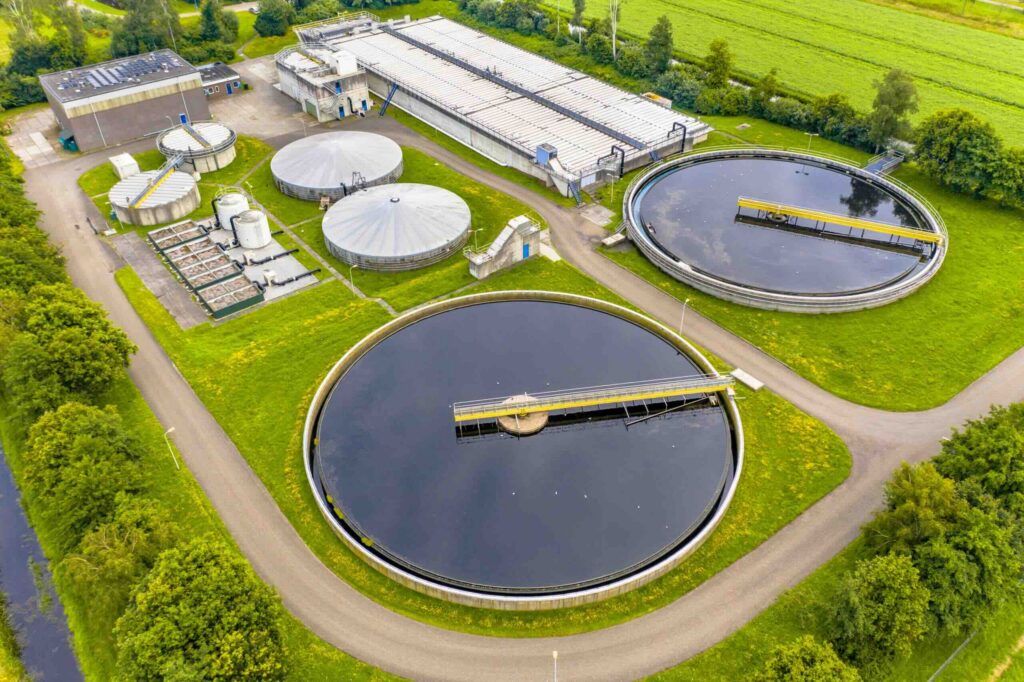
Blog Scientific and engineering foundations for operational AI in environmental infrastructure Applying machine learning to wastewater systems requires a different mindset than building models for purely digital environments. Wastewater networks are physical, distributed, and continuously evolving systems governed by fluid dynamics, environmental variability, and operational constraints. Signals emerge from real-world processes such as gravity-driven flow, […]