
December 22, 2025
By:
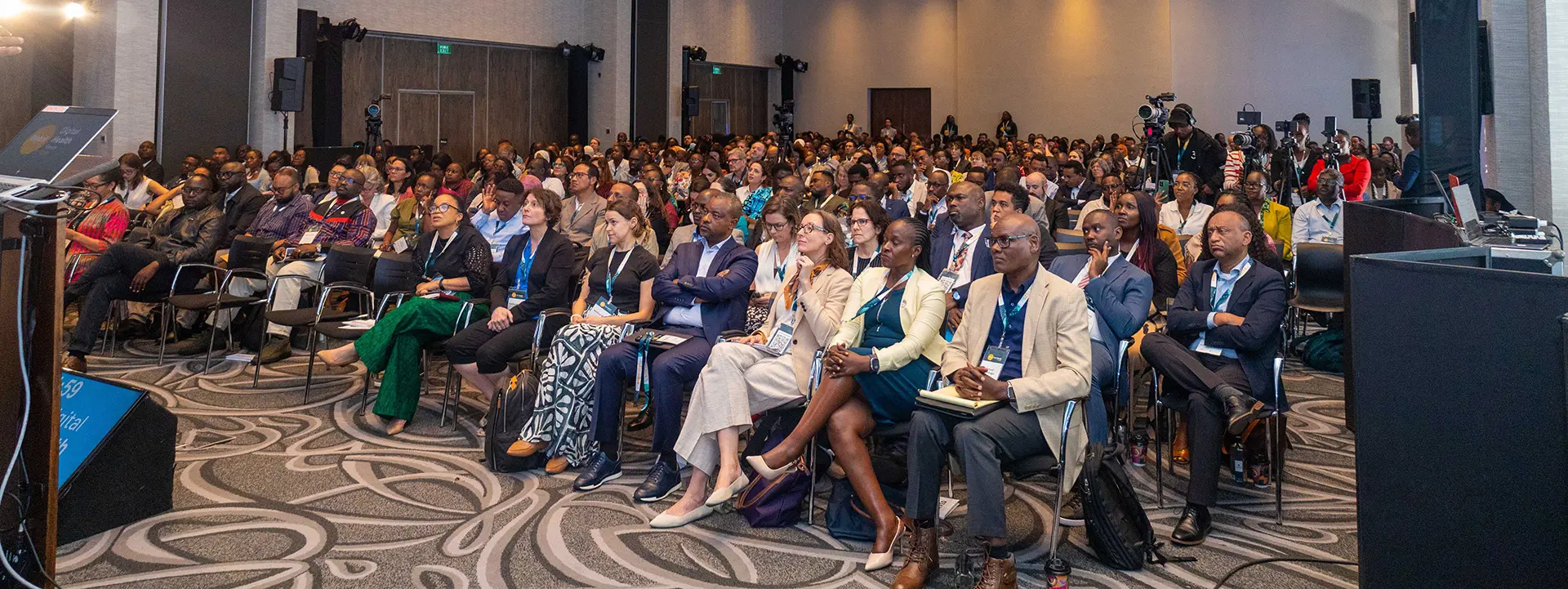
A pattern emerged across sessions and booth conversations that reveals where the sector’s focus needs to shift. The innovations on display were impressive: AI-powered diagnostic tools, sophisticated messaging platforms, and advanced EMR systems. Yet the conversations kept returning to a more fundamental question. What enables these solutions to deliver value consistently rather than only in ideal conditions?
The answer points to infrastructure that’s easy to take for granted in well-resourced settings but remains inconsistent where it’s needed most. Reliable connectivity. Functional data exchange layers. Available devices. Coherent national architectures. These foundations determine whether promising technology can scale beyond controlled pilots.
What became clear at GDHF is that the sector is recognising this gap. More conversations focused on interoperability standards than on individual product features. More questions centred on data governance frameworks than on algorithm sophistication. More sessions examined how to build digital literacy among health workers than how to design more intuitive interfaces.
This represents a maturation of the digital health ecosystem. The early phase focused on proving what was possible. The current phase is about building the unglamorous but essential infrastructure that enables those possibilities to work at scale. Strong data governance. Technical architectures that allow systems to communicate. Training programs that develop genuine digital literacy. These aren’t competitive advantages for individual organizations. They’re collective goods that benefit the entire sector.
Interoperability was a major theme throughout GDHF, and for good reason. With so many digital health solutions now in the market, the challenge isn’t lack of tools. It’s that these tools rarely work together. Data gets trapped in silos. Health workers end up managing multiple disconnected systems. National health information architectures remain fragmented.
The conversations around interoperability revealed a maturing understanding of what’s actually required. It’s not just technical standards, though those matter. It’s also about political will to enforce those standards, governance structures that enable data sharing while protecting privacy, and the capacity within ministries to coordinate across multiple implementing partners who each have their own preferred platforms.
Sand’s work intersects directly with these challenges. The Health Operating System isn’t just about digitizing individual facilities. It’s about creating the infrastructure layer that allows different parts of the health system to coordinate effectively. Real-time visibility into supply levels across facilities only works if those facilities can actually share data. AI-powered decision support only delivers value if it can pull information from multiple sources rather than operating on incomplete snapshots.
“Pilotitis” came up at GDHF just as it did at Norrsken Africa/Week. Many in the sector are working to move beyond the pattern where projects launch with grant funding, show promising results in controlled environments, then struggle to scale or sustain themselves when that funding ends.
What’s encouraging is that this challenge is being recognized and addressed. Several examples emerged at GDHF of governments directly procuring digital health solutions rather than waiting for donor funding. Janitri’s devices being purchased directly by Tanzania’s Ministry of Health represents more than just a sale. It signals trust, long-term commitment, and a maturing ecosystem where governments view digital health as infrastructure worth investing in rather than experimental add-ons.
The underlying challenge is financial sustainability. Digital health solutions need business models that can operate without perpetual external funding, but they also need to serve populations that often can’t pay commercial rates. Threading that needle requires creativity, government partnership, and realistic expectations about timelines and scale.
Sand’s approach focuses on building systems that governments can own and operate rather than solutions that require ongoing external support. When Rwanda’s Ministry of Health can see real-time data from 160 digitized health posts without waiting for external consultants to compile reports, that changes the value proposition. The infrastructure becomes essential rather than experimental.
Throughout GDHF, stakeholders asked consistently for evidence. Not just promising technology, but rigorous impact data showing that digital health interventions actually improve outcomes. This represents a healthy maturation of the sector. The early days of digital health saw a lot of enthusiasm based on potential rather than proof. Now funders, governments, and implementers want to see concrete results.
This shift creates both challenges and opportunities. Gathering rigorous evidence requires time, resources, and often methodologies that don’t fit neatly into typical project cycles. But organizations that can demonstrate measurable impact gain significant advantage in conversations with governments and donors.
The evidence question also intersects with the sustainability challenge. If a solution shows impressive results during a well-funded pilot but then struggles when that funding ends, what does that evidence actually prove? The question isn’t just “does this work?” but “does this work in a way that can sustain itself over time?”
AI featured prominently at GDHF, as it does at most tech gatherings these days. But the conversations revealed a gap between what AI can theoretically do and what makes practical sense to deploy in resource-constrained settings.
The most interesting discussions weren’t about diagnostic algorithms or predictive analytics. They were about governance frameworks, validation requirements, and ethical considerations. As AI adoption accelerates, governments and implementing partners are grappling with questions that don’t have easy answers. How do you validate an AI model for clinical use when the regulatory frameworks don’t exist yet? What happens when an AI system trained on data from high-income countries gets deployed in contexts with different disease patterns and resource constraints? Who’s liable when something goes wrong?
These aren’t theoretical concerns. They’re practical barriers that need to be addressed before AI can deliver on its promise in digital health. The technology itself is often ready. The systems, governance structures, and capacity to deploy it responsibly often aren’t in place.
Implementation experience in Rwanda has reinforced lessons about deploying AI in resource-constrained settings. Training health workers on AI tools reveals that technical capability is only part of the equation. The more critical skills involve recognizing when AI adds value versus when simpler approaches work better, understanding the limitations of algorithms, and maintaining human judgment in clinical decision-making. These considerations apply broadly across contexts where advanced technology meets field realities.
A consistent theme across GDHF was the emphasis on localization. Not just translating interfaces into local languages, but designing solutions that fit local workflows, training programs that build genuine capacity rather than dependency, and partnership models that prioritize local ownership from the start.
This matters because digital health solutions imposed from outside rarely sustain themselves. The most successful implementations at GDHF were those where local teams had been involved in design, where training focused on building capacity to maintain and adapt systems over time, and where governments felt ownership rather than being passive recipients of external interventions.
Sand’s partnership with Society for Family Health in Rwanda reflects this approach. SFH brings deep operational experience and community trust. Sand provides technical infrastructure and expertise. The combination creates something neither organization could achieve alone, with the ultimate goal being systems that Rwanda’s government can own and operate independently.
GDHF reinforced that the digital health sector is at an inflection point. The early enthusiasm for technology as solution has matured into more realistic understanding of what’s required for lasting impact. Governments are becoming more sophisticated procurers. Funders are demanding evidence rather than promises. Implementers are recognizing that local ownership matters more than external expertise.
This maturation creates both challenges and opportunities. Organizations that can demonstrate measurable impact, build financially sustainable models, and enable genuine local ownership will find receptive audiences. Those still operating on assumptions from the pilot era will struggle.
Other articles that may interest you
Loading posts...